
After a two-year lull, the deal pipeline in India's hospitality sector, which has witnessed a strong revival since the second wave of the pandemic receded, is running full. Family offices, high net-worth individuals (HNIs) and institutional investors are looking at the sector with renewed interest, according to investment and transaction advisory firms working on multiple deals. Most of them declined to divulge details of the deals for reasons of confidentiality. The cumulative debt of the tourism, hotels and restaurant sector rose 8.2 per cent year-on-year (YoY) to Rs 64,408 crore as of March 25, 2022 against Rs 59,519 crore on March 26, 2021, according to the Reserve Bank of India.

The economy segment of India's car market is unlikely to revive soon term as inflation and prices prompt buyers to defer purchases. The share of entry-level cars in the passenger vehicle market dropped to the lowest in seven years at the end of the Financial Year 2021-22 (FY22). A recovery in the segment will be largely driven by the overall economic growth, improvement in income levels, and easing of semiconductor shortage, say carmakers and analysts.

Recently, TPEM's first born electric concept, Avinya broke cover. The model promises a minimum range of 500 kilometres and advanced technology features, aimed at buyers in India and outside. TPEM, the newly formed entity may also consider a separate dedicated sales channel for the EVs with a distinctive corporate identity once the volumes reach a critical mass and throughput is large enough for the dealers to be profitable, said Chandra. Elaborating further on the hiring strategy he said, "We will hire from everywhere-wherever the talent of the required competency is available."
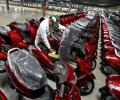
So far at least eight incidents of EV fires have been reported in just over a month's time.

'If the Indian government actually delivers on the infrastructure plans, the hospitality sector would double itself by 2025.'

Ola Electric became the latest among electric scooter (e-scooter) makers to have started the exercise of recalling a specific batch of its model after a rap on the knuckles by the government. Union Minister of Road Transport & Highways Nitin Gadkari on Thursday advised electric vehicle (EV) companies to act responsibly by identifying and recalling defective batches without waiting for orders or guidelines from the ministry. The Bengaluru-based start-up is conducting pre-emptive diagnostics and health check on 1,441 scooters, it said in a statement on Sunday.

Nepal's decision to ban the import of non-essential items amid depleting forex reserves may hit Indian exports. The country's central bank - Nepal Rastra Bank - last week instructed commercial banks not to open letters of credit (LCs) for importing non-essential items. This is to prevent further decline of the country's foreign exchange reserves. However, it has not issued any formal communication yet.

Automotive (auto) and consumer appliance companies are hoping for a bounty from the harvest season after two consecutive dry spells in 2020 and 2021. The season, which also marks the beginning of the regional New Year, kicked in across the country from April 1 - Gudi Padwa in Maharashtra; Ugadi in Karnataka, Telangana, and Andhra Pradesh; Bihu in the Northeast; and Chaitra Navratri in the North. Manufacturers and retailers of cars, two-wheelers, and consumer appliances said they have seen demand pick up year-on-year (YoY) at a brisk pace across categories.

Overseas shipments at auto firms expanded at a brisk pace year-on-year (YoY) in March, bumping up the overall annual exports for FY22 and taking it to a record level for some like Maruti Suzuki India and Bajaj Auto. Amid a semiconductor shortage, a depreciating rupee and a strong demand in various export destinations, passenger vehicle makers diverted capacity meant for the local market in favour of the more-lucrative export market. Among the passenger vehicle makers, market leader Maruti Suzuki led the rally with its overseas shipments touching a record level of 238,376 units in FY22 - the highest for the company in any financial year.

Tata Motors is actively considering tapping into some of the export markets beyond South Asia, for its range of electric vehicles (EVs) as it sees an opportunity of selling affordable EVs in markets outside India. The export plans will coincide with the commercial launch of the Curvve - an electric SUV concept that broke cover on Wednesday, in two years from now, Shailesh Chandra, MD, Tata Motors PVs and Electric Mobility, told Business Standard. "We are actively thinking of the international markets and we would like to go with a portfolio of products. "We have identified a few markets and in a couple of years, we should commence the same," said Chandra.

The recurrent increases in fuel prices over the past 10 days are eating into the margins of transporters, who will be forced to pass on the hikes to their customers. This, in turn, is set to make the prices of daily consumables and other goods dearer, affect consumption, and slow economic growth, said transporters and analysts. Freight rates on grand trunk routes have shot up 3-4 per cent month-on-month in the past few days, according to the Indian Foundation of Transport Research & Training (IFTRT).

The government-appointed expert committee, which probes incidents of Ola Electric's S1 Pro and Okinawa vehicles catching fires, has added the latest case of fire involving PureEV electric scooter to its investigation, a senior government official told Business Standard. "A team comprising experts from Indian Institute of Science (IISC) and Centre for Fire, Explosive and Environment Safety (CFEES) are investigating the cases. "As soon as the report is submitted, we shall take appropriate action," said Giridhar Aramane, secretary at the ministry of road transport and highways.
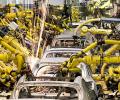
The sharp increase in commodity prices on account of the Russia-Ukraine war has put automakers in a fix. After the frequent price hikes in the current fiscal, manufacturers fear that any more price increases may further dent the already weak demand in certain segments. "We have taken several hikes and cannot immediately do it again. "We will have to closely watch the situation and act accordingly," said an official at an auto firm, declining to be identified. Even for companies like Tata Motors Passenger Vehicles, which has had a strong volume run and a robust order book, passing on the entire costs has been tough.

Size matters on the road. Small is not dominating India's car market any more. The share of cars priced up to Rs 5 lakh in the passenger vehicle market has fallen to 10.5 per cent in the first 11 months of 2021-22, compared with 26 per cent in 2018-19 (FY19), the lowest in four years, according to data from industry sources. Even the share of those in the price range between Rs 5 lakh and Rs 7.5 lakh has dropped to 32.4 per cent in the same period, from 34.9 per cent.

The Tata group flagship has sold more sport utility vehicles (SUVs) in the domestic PV market in the past four months than any other automotive manufacturer, cementing its no.1 spot. It first grabbed pole position in the SUV segment in October 2021 after the launch of the Punch - a sub-compact SUV offering.
Encouraged by a steady recovery seen in the first two weeks of February, hospitality firms expect the business hotels in metros including Mumbai, Bengaluru, Chennai, Kolkata and Hyderabad that have been lagging the leisure hotels in terms of revenue per available room (RevPar) to catch up in the coming months. Huge pent-up demand for MICE (meetings, incentives, conference and exhibitions) as companies slowly return to hosting physical events coupled with easing of the recently announced restrictions on international travel, will also help in getting closer to pre-Covid levels of revenue, they said. The Omicron wave that peaked in January had derailed the strong month-on-month recovery seen by the hotels since August.
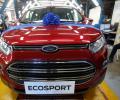
Ford, which had announced to quit the Indian market last year, said it was exploring the possibility of using one of its plants in India to produce electric cars for exports.
After a very weak December quarter and a poor year-to-date fiscal year volumes-when sales plunged to the lowest in nine years, the signs in the first 15 days of January haven't been encouraging either. "Though the severity of the current wave is not as high as the previous one, it has hit the sentiments hard impacting conversion of enquiries into sales," said Vinkesh Gulati, president, Federation of Automobile Dealers Association (FADA).

In a bad start to the new year, hotels are counting their losses again. Weddings and corporate events for this month have either been called off or postponed. The blow has throttled the nascent recovery which had kicked in around August. It is primarily hurting the banquet-driven hotel chains, some of which are seeing cancellations running into lakhs for a single day.

On the itinerary: Luxury camping, tribal homestays, heritage cities.
 © 2025 Rediff.com - Investor Information - Advertise with us - Disclaimer - Privacy Policy - Sitemap - Feedback - About us - Terms of use - Grievances